Life After Knee Replacement
Total knee replacement is one of the most common and successful orthopedic surgeries performed today. But the surgery itself is only half the equation — the other half is rehabilitation. Physical therapy is essential to regaining your strength, mobility, and independence after surgery.
At The Back Clinic, we’ve guided hundreds of patients through knee replacement recovery. Here’s a realistic timeline of what to expect.
Weeks 1–2: The Early Phase
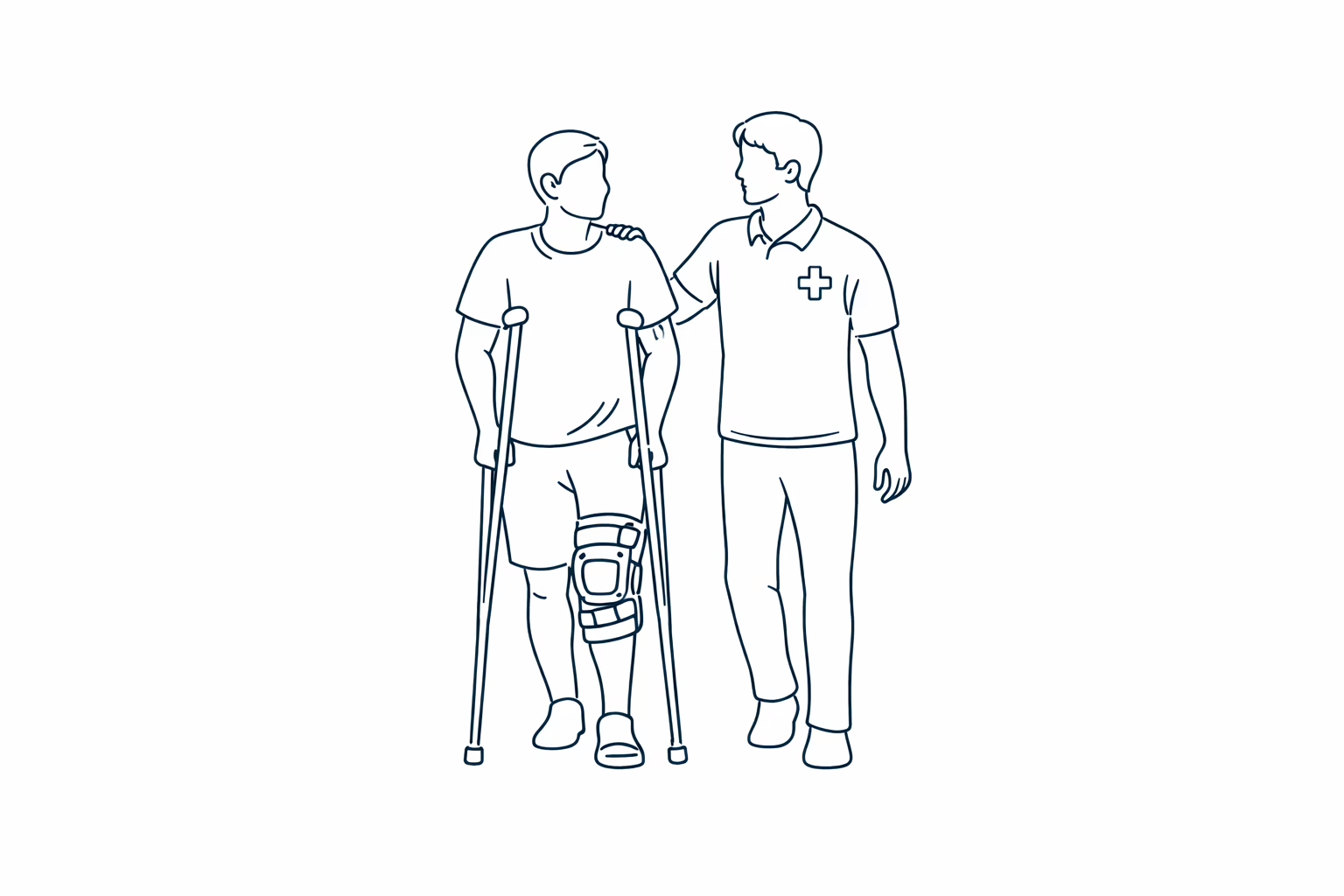
Recovery begins immediately. In the first two weeks, the focus is on managing swelling, protecting the surgical site, and restoring basic knee motion. Your therapist will work with you on gentle range-of-motion exercises, quad activation, and safe walking with an assistive device like a walker or cane.
Goals for this phase include bending the knee to about 90 degrees, straightening it fully, and walking short distances safely. Pain and swelling are normal — your therapist will guide you on icing, elevation, and activity modification.
Weeks 3–6: Building Strength
As swelling decreases and motion improves, the focus shifts to strengthening. Your therapist will introduce progressive exercises targeting the quadriceps, hamstrings, and hip muscles. Balance training begins, and you’ll work on functional activities like stair climbing, sitting and standing, and walking longer distances.
Most patients transition from a walker to a cane during this phase, and some may no longer need an assistive device by the end of week six.
Weeks 7–12: Functional Recovery
This is where many patients start to feel like themselves again. Exercises become more challenging, with a focus on endurance, coordination, and returning to daily activities. Your therapist will work with you on movements specific to your life — whether that’s gardening, playing with grandchildren, or getting back to a fitness routine.
By the end of this phase, most patients have significant improvement in walking distance, stair navigation, and overall confidence in their knee.
Months 3–6: Return to Full Activity
Continued progress happens over the following months. While formal therapy sessions may decrease in frequency, your home exercise program remains important. Many patients return to low-impact activities like walking, swimming, cycling, and golf during this period.
Full recovery — including the resolution of residual stiffness and the ability to “forget” about your knee during daily life — typically takes 6–12 months.
Why One-on-One PT Matters After Surgery
Post-surgical rehab requires close attention. Your therapist needs to monitor your incision, watch for signs of complication, ensure you’re progressing at the right pace, and adjust your program as you improve. At The Back Clinic, every session is one-on-one — so you get the focused care this recovery demands.
Planning for Surgery?
If you have a knee replacement scheduled — or you’re already recovering and want expert guidance — we’re here to help. Call The Back Clinic at (302) 998-4477 or schedule your evaluation online.